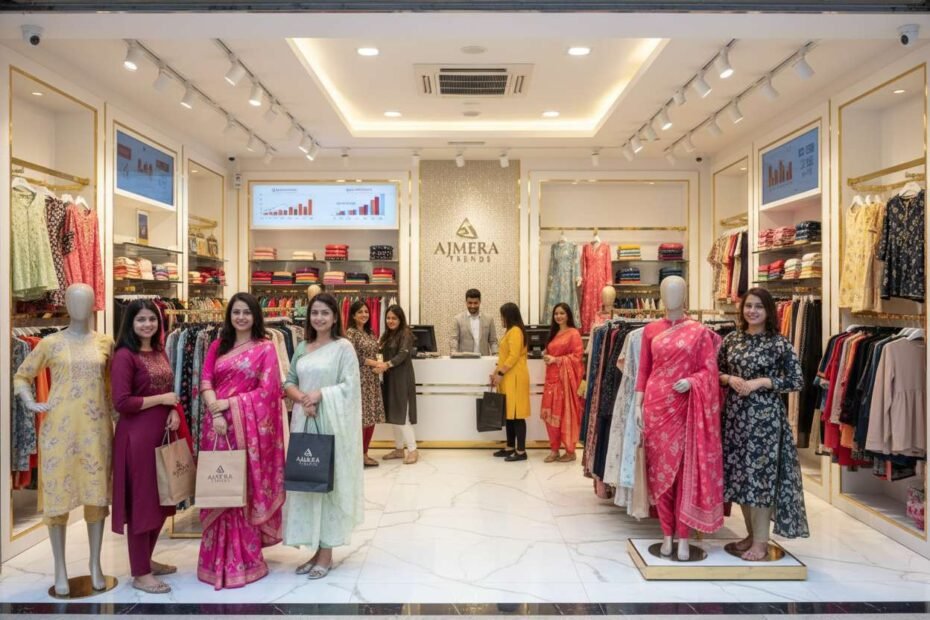
Ajmera Fashion is a name that resonates deeply in India’s ethnic apparel world — especially among retailers, wholesalers, and fashion enthusiasts looking for quality fabrics and timeless designs. Rooted in Surat, Gujarat’s robust textile ecosystem, this brand has grown from humble beginnings into a multifaceted supplier and fashion network that extends across cities and even internationally.
Unlike fast‑fashion labels that chase trends every season, this brand grew on heritage, craftsmanship, and wholesale distribution, serving businesses in small towns as well as metro hubs. Whether you’re searching for traditional sarees with intricate weaving or contemporary kurtis for daily wear, the breadth of Ajmera Fashion’s catalog speaks to its ambition — and its adaptability.
I remember the first time I browsed a family’s shop catalogue sourced from here — the variety was overwhelming, from bridal classics to everyday wardrobe essentials — and it showed how extensive this supplier’s collections really are.
Who Founded Ajmera Fashion and Why It Matters
At the core of this enterprise is Mr. Ajay Ajmera, a textile veteran who launched the company in 2011 after decades in the industry. His vision wasn’t just to build a business, but to empower small retailers and entrepreneurs with direct access to quality textiles — eliminating middlemen and lowering barriers to entry.
The company positions itself as a partner to wholesalers and retailers, offering apparel that spans women’s, men’s, and kids’ clothing. It also emphasizes quality and trust, handling everything from sourcing to distribution from its Surat base.
This focus on wholesale and trade has enabled over 100,000 retailers to stock products that appeal to a wide demographic. Over 30 countries also receive exports from this network, reflecting how a strong manufacturing base in Surat can have global reach.
What You Can Find in the Apparel Range
Ajmera Fashion’s offerings include a broad mix of products, with emphasis on both traditional and modern designs. Here’s a simple comparison to help you see how it stacks up against typical retail brands in the same segment:
| Category | Typical Retail Brand | Ajmera Fashion Offering |
|---|---|---|
| Women’s Wear | Trend-driven styles | Sarees, lehengas, suits, kurtis, ethnic wear |
| Men’s Wear | Casual & formal clothing | Classic kurtas, ethnic shirts |
| Kids’ Collection | Seasonal basics | Kids kurtis, festive outfits |
| Target Market | End consumers | Retailers, wholesalers, entrepreneurs |
| Distribution | Retail stores | Pan‑India wholesale + exports |
| Based on product insights from multiple supplier profiles |
This broad catalog makes it easier for shop owners to tailor their inventory to their local customer base — from bridal wear in festival seasons to everyday outfits during the rest of the year.
The Unique Value You Might Miss
What sets Ajmera Fashion apart — beyond just its products — is its empowerment model. Rather than just selling clothes, the brand has actively helped many people start their own ventures. Through wholesale partnerships and even franchise extensions like Ajmera Trends, individuals with little prior business experience can open stores backed by established supply and support systems.
This focus on enabling business ownership — especially in smaller cities and towns — has helped shift how people think about fashion retail. It’s not just about clothes; it’s about opportunity, community growth, and inclusion. Those who have joined this ecosystem often find that they aren’t just buying stock — they’re building a livelihood, sometimes in places where such opportunities were previously limited.
Practical Business Applications
Imagine a small town retailer in Bihar who wants to expand beyond basic garments. With limited capital and little access to fashion hubs, such a shopkeeper would traditionally struggle to bring in trendy stock that appeals to customers. By partnering with a supplier like Ajmera Fashion, they can access a diversified catalog, affordable wholesale pricing, and ongoing support — enabling them to compete with larger stores in nearby cities and even scale up their business.
That’s the kind of real-world impact this platform has — bridging the gap between big textile hubs and underserved markets.
Quality Perceptions and Market Feedback
As with any rapidly growing company dealing with diverse stakeholders, customer feedback varies. Some buyers praise the range and timely delivery, while others report mixed experiences regarding product expectations from catalogs versus final shipments. This highlights the importance of clear communication between suppliers and retailers, especially in wholesale trade where samples and specifications matter.
Retailers often emphasize quality control, accurate catalog descriptions, and after‑sales support as key factors that determine long-term satisfaction in wholesale partnerships — and this applies across the ethnic apparel industry, not just to one supplie
Also Read: Arvind Fashion Share Price Analysis & Future Outlook
Conclusion
Ajmera Fashion represents a significant chapter in India’s ethnic apparel ecosystem. From its origins in Surat to its widespread reach among retailers and entrepreneurs, it blends traditional craftsmanship with modern business strategies. While no brand is without its challenges, the model’s emphasis on empowerment — allowing individuals to build businesses around fashion — gives it a distinct place in the market.
Whether you’re a small shop owner, a wholesale buyer, or simply a fashion enthusiast interested in Indian textiles, understanding how companies like this operate offers valuable insight into how fashion flows from manufacturing hubs to consumers across the country and beyond.
FAQs
What is Ajmera Fashion best known for?
Ajmera Fashion is known for supplying ethnic wear such as sarees, lehengas, kurtis, and other garments primarily to retailers and wholesalers, with a strong base in Surat, India.
Can individuals buy directly, or is it wholesale only?
While the company primarily caters to trade partners, many retailers and franchise models make it possible for individual entrepreneurs to access stock for resale.
Who founded this brand?
The company was founded by Ajay Ajmera, a textile industry veteran who focused on empowering small businesses with direct access to quality apparel.
Does Ajmera Fashion export internationally?
Yes — the brand supplies products to numerous countries, expanding Indian ethnic wear’s global footprint.
Is there a retail franchise associated with the brand?
Yes, the Ajmera Trends franchise network allows entrepreneurs to operate retail outlets under the brand’s umbrella, offering clothing across categories.