The 1920s was a decade that didn’t just influence fashion—it completely transformed it. Often called the “Roaring Twenties,” this period marked a dramatic shift in clothing styles, social norms, and personal expression. After the restrictions of the Victorian and Edwardian eras, fashion in the 1920s became lighter, freer, and far more expressive. People didn’t just dress to cover themselves; they dressed to make a statement.
This was the age of jazz, flappers, prohibition parties, and rapidly changing lifestyles. Clothing became a reflection of rebellion and modernity. From dropped waistlines to shorter hemlines, every detail of 1920s fashion told a story of liberation.
The Rise of a New Fashion Identity
One of the most striking aspects of 1920s fashion was how quickly it broke away from tradition. Women, in particular, embraced clothing that allowed movement and comfort. Corsets, once a wardrobe essential, were largely abandoned in favor of looser silhouettes. Dresses became straighter, waistlines dropped to the hips, and fabrics were lighter and more fluid.
Men’s fashion also evolved. Suits became more relaxed, though still structured. The three-piece suit remained popular, but softer tailoring and lighter fabrics gave men a more modern appearance.
The overall shift was not just aesthetic—it was cultural. People were rejecting rigid social expectations and embracing individuality.
Flapper Style: The Symbol of the 1920s
When people think of 1920s fashion, the flapper style is usually the first image that comes to mind. Flappers were young women who embraced bold clothing, short hairstyles, and a carefree lifestyle.
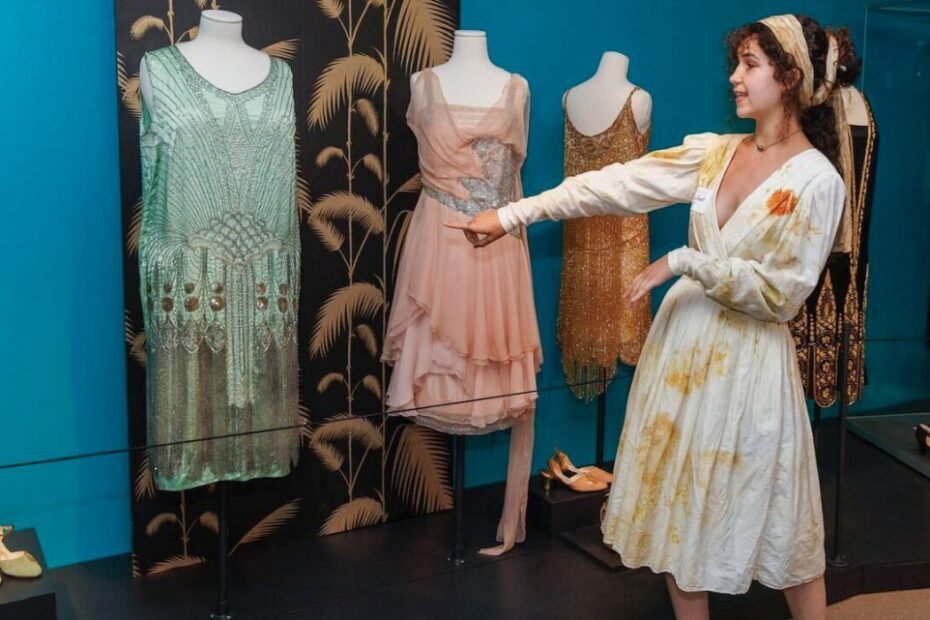
Their dresses were often knee-length, decorated with beads, sequins, and fringe that moved beautifully while dancing to jazz music. The iconic “bob cut” hairstyle completed the look, symbolizing independence and rebellion.
I once visited a vintage costume exhibition where a recreated flapper dress was displayed under soft lighting, and seeing the intricate beadwork up close made it clear why these outfits were considered revolutionary for their time.
Men’s Fashion in the 1920s
While women’s fashion often steals the spotlight, men’s style in the 1920s was equally influential. Suits were the standard for most occasions, but there was a noticeable shift toward comfort and versatility.
The typical man wore:
- A tailored suit (often in wool or tweed)
- High-waisted trousers
- Waistcoats
- Oxford shoes or two-tone brogues
Hats were also essential. Fedora and newsboy caps became popular, adding personality to everyday outfits.
Sportswear also began gaining importance during this decade, reflecting the growing popularity of leisure activities like golf and tennis.
Accessories That Defined the Decade
Accessories played a huge role in 1920s fashion. They were not just additions—they were statements.
Women often wore:
- Long pearl necklaces
- Feathered headbands
- Cloche hats
- Decorative brooches
Men leaned toward:
- Pocket watches
- Tie pins
- Leather gloves
- Stylish hats
Even small details carried meaning. A single accessory could elevate an entire outfit, reflecting wealth, status, or personality.
Fabrics, Colors, and Textures
The 1920s introduced a wide variety of luxurious fabrics and bold textures. Silk, satin, chiffon, velvet, and lace dominated women’s fashion, while men often preferred wool and tweed.
Colors also became more expressive. While earlier decades favored muted tones, the 1920s embraced both pastels and rich jewel tones. Gold, silver, emerald green, and deep red were particularly popular in evening wear.
The combination of texture and color created visually dynamic outfits that stood out, especially under the dim lighting of jazz clubs and ballroom parties.
Comparison: 1920s Fashion vs Modern Fashion
To better understand how far fashion has evolved, here’s a simple comparison:
| Feature | 1920s Fashion | Modern Fashion |
|---|---|---|
| Silhouette | Straight, loose, dropped waist | Diverse: fitted, oversized, layered |
| Women’s Dresses | Knee-length, fringe, beaded | Mini to maxi, casual to formal |
| Men’s Suits | Structured but relaxed tailoring | Slim fit, stretch fabrics, casual suits |
| Fabrics | Silk, chiffon, wool, velvet | Mixed synthetics, sustainable fabrics |
| Accessories | Pearls, hats, gloves | Minimalist or statement-based |
| Style Influence | Jazz culture, rebellion | Global trends, social media |
This comparison highlights how 1920s fashion laid the foundation for modern experimentation in style.
Where the 1920s Fashion Still Comes Alive Today
Imagine attending a themed gala night in a modern city. Guests arrive wearing flapper-inspired dresses, tuxedos with suspenders, and vintage hats. Jazz music fills the room, and the atmosphere instantly feels like a time portal back to the 1920s.
This is not uncommon today—many fashion designers and event planners still draw inspiration from this iconic era. The 1920s aesthetic is frequently used in weddings, fashion shoots, and even Hollywood films because of its timeless elegance and dramatic flair.
Why 1920s Fashion Still Matters Today
Even after a century, the influence of 1920s fashion is still visible. Designers continuously reinterpret flapper dresses, fringe details, and Art Deco patterns in modern collections. The decade’s emphasis on freedom and self-expression resonates strongly with today’s fashion culture.
What makes this era so enduring is its bold rejection of limitations. It encouraged people to dress not for approval, but for identity.
Another subtle but powerful insight is how the 1920s redefined the idea of “beauty.” Instead of rigid standards, fashion became playful, experimental, and inclusive of new body movements and lifestyles.
The Legacy of a Style Revolution
The 1920s didn’t just change clothing—it changed attitudes. It marked the beginning of modern fashion as we know it, where personal expression became more important than tradition.
From the jazz-filled dance floors to everyday streetwear evolution, the decade’s influence continues to inspire designers, artists, and fashion lovers around the world.
Even today, when we see fringe dresses, vintage suits, or Art Deco accessories, we are witnessing echoes of a decade that dared to be different.
Read More: Paris Fashion Week 2025 Trends, Dates & Highlights Guide
Conclusion
1920s fashion remains one of the most iconic style eras in history. It represents freedom, innovation, and cultural transformation. Whether it’s the elegance of flapper dresses or the sophistication of men’s tailored suits, the decade continues to inspire modern fashion trends.
Its legacy is not just in museums or films—it lives on in the way we dress, express ourselves, and embrace individuality.
FAQs
1. What was the most popular style for women in the 1920s?
The flapper dress was the most iconic, featuring loose silhouettes, fringe, and knee-length cuts.
2. Why was 1920s fashion so revolutionary?
It broke away from restrictive clothing like corsets and introduced comfort, freedom, and individuality.
3. What fabrics were commonly used in the 1920s?
Silk, satin, chiffon, velvet, wool, and lace were widely used.
4. Did men’s fashion change much in the 1920s?
Yes, men’s fashion became more relaxed with softer tailoring and more casual sportswear influences.
5. Is 1920s fashion still relevant today?
Absolutely. Many modern designers still use 1920s elements like fringe, Art Deco patterns, and vintage silhouettes.